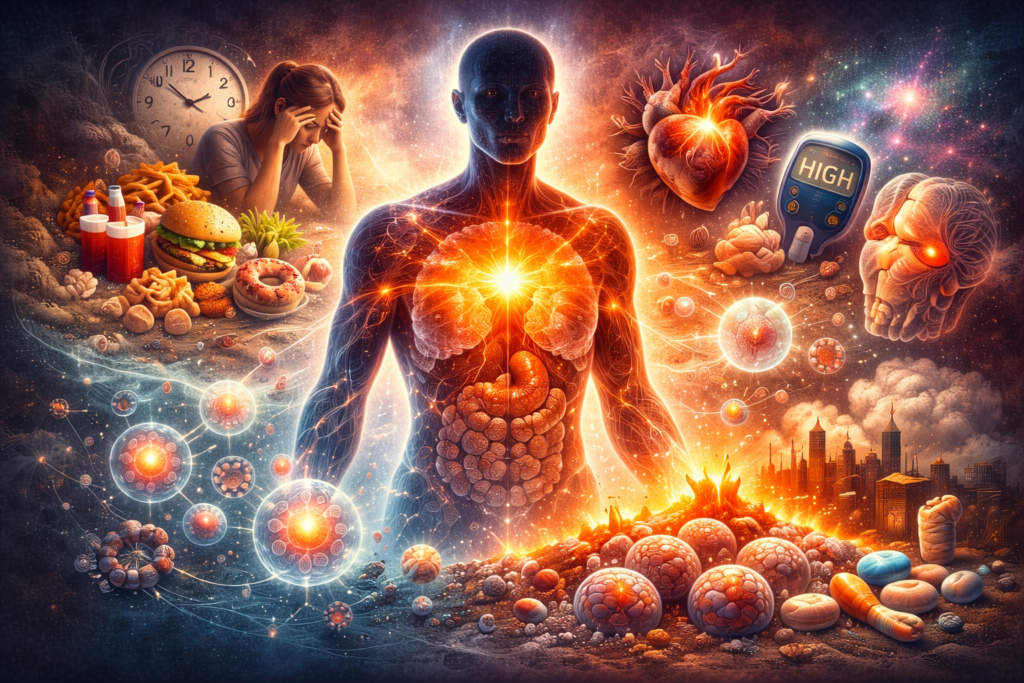
Why Inflammation Is the Root of Many Chronic Diseases
When people think about disease, they often focus on symptoms.
Fatigue, pain, digestive issues, weakened immunity.
But what if these are not the real problem…
but signals pointing to something deeper?
What Is Inflammation?
Inflammation is your body’s natural defense mechanism.
When you get injured or exposed to harmful stimuli, your immune system responds by creating inflammation to protect and repair.
In the short term, this is helpful.
But when inflammation becomes chronic, it can start to damage the body instead of protecting it.
Acute vs Chronic Inflammation
There are two types of inflammation:
Acute inflammation
- Short-term
- Helps healing
- Necessary for survival
Chronic inflammation
- Long-term
- Often silent
- Gradually damages tissues and cells
Many people today are not dealing with obvious illness —
but with low-grade, ongoing inflammation.
Why Chronic Inflammation Is So Common Today
Modern lifestyle plays a major role in driving inflammation.
Some key factors include:
- Processed and nutrient-poor diets
- Chronic stress
- Lack of sleep
- Environmental toxins
- Sedentary lifestyle
Over time, these factors create a constant state of stress inside the body.
At the cellular level, this leads to:
- Increased oxidative stress
- Impaired repair mechanisms
- Disrupted cellular function
The Connection Between Inflammation and Disease
Research increasingly shows that chronic inflammation is linked to many long-term health conditions, including:
- Cardiovascular disease
- Metabolic disorders
- Autoimmune conditions
- Neurodegenerative diseases
This is why inflammation is often described as a “root cause” rather than just a symptom.
Why Treating Symptoms Isn’t Enough
Many approaches focus on reducing symptoms.
But if the underlying inflammation is not addressed, the problem may persist or return in different forms.
This is where a different approach becomes important:
→ Supporting the body at the cellular level
If you haven’t yet explored how cellular health plays a role, you can start here:
→ [What Is Cellular Nutrition]
→ [Do supplements work?]
A Cellular Perspective on Inflammation
At its core, inflammation is closely tied to how well your cells are functioning.
When cells lack essential nutrients, they struggle to:
- Regulate inflammation properly
- Repair damage efficiently
- Maintain internal balance
Over time, this imbalance can contribute to chronic inflammation.
A Shift in Perspective
Instead of asking:
“How do I eliminate symptoms?”
A more powerful question might be:
“How do I support my body so that inflammation naturally decreases?”
This shift moves the focus from control
to support.
From reaction
to prevention.
→ [ Why Am I Always Tired Even With a Healthy Diet? ]
→ [How to improve cellular health]
Where to Start
Reducing chronic inflammation doesn’t require extreme changes overnight.
It starts with small, consistent steps:
- Improving nutrient intake
- Supporting cellular health
- Managing stress
- Prioritizing recovery
If you want a structured way to begin:
Or if you prefer a more personal approach:
Your body is always communicating.
Inflammation is not the enemy.
It’s a signal.
The question is —
are we listening?
Pingback: What Is Cellular Nutrition? Benefits, Science & Why It Matters for Long-Term Health
Pingback: Do Supplements Actually Work? What Most People Get Wrong - Percy Lin | Cellular Health, Nutrition & Residual Income
Pingback: Why Am I Always Tired Even With a Healthy Diet?